

In today's trend of consumer electronics towards ultra-thin, intelligent, and multifunctional development, the increasing power and thinner products have increasingly revealed the problem of how heat is dissipated. Due to its outstanding thermal conductivity, thermally conductive graphite sheets have received increasing attention and have wide applications in smartphones, ultra-thin PCs, LED TVs, and other fields.
Thermal conductive graphite sheets, due to their unique grain orientation, conduct heat uniformly along two directions (X-axis, Y-axis, and Z-axis). The layered structure can adapt well to the surface undulations of the device after processing. The unique crystal structure and processing method enable it to provide thermal isolation and shielding of heat sources and components while conducting heat uniformly, significantly improving the performance of electronic products.
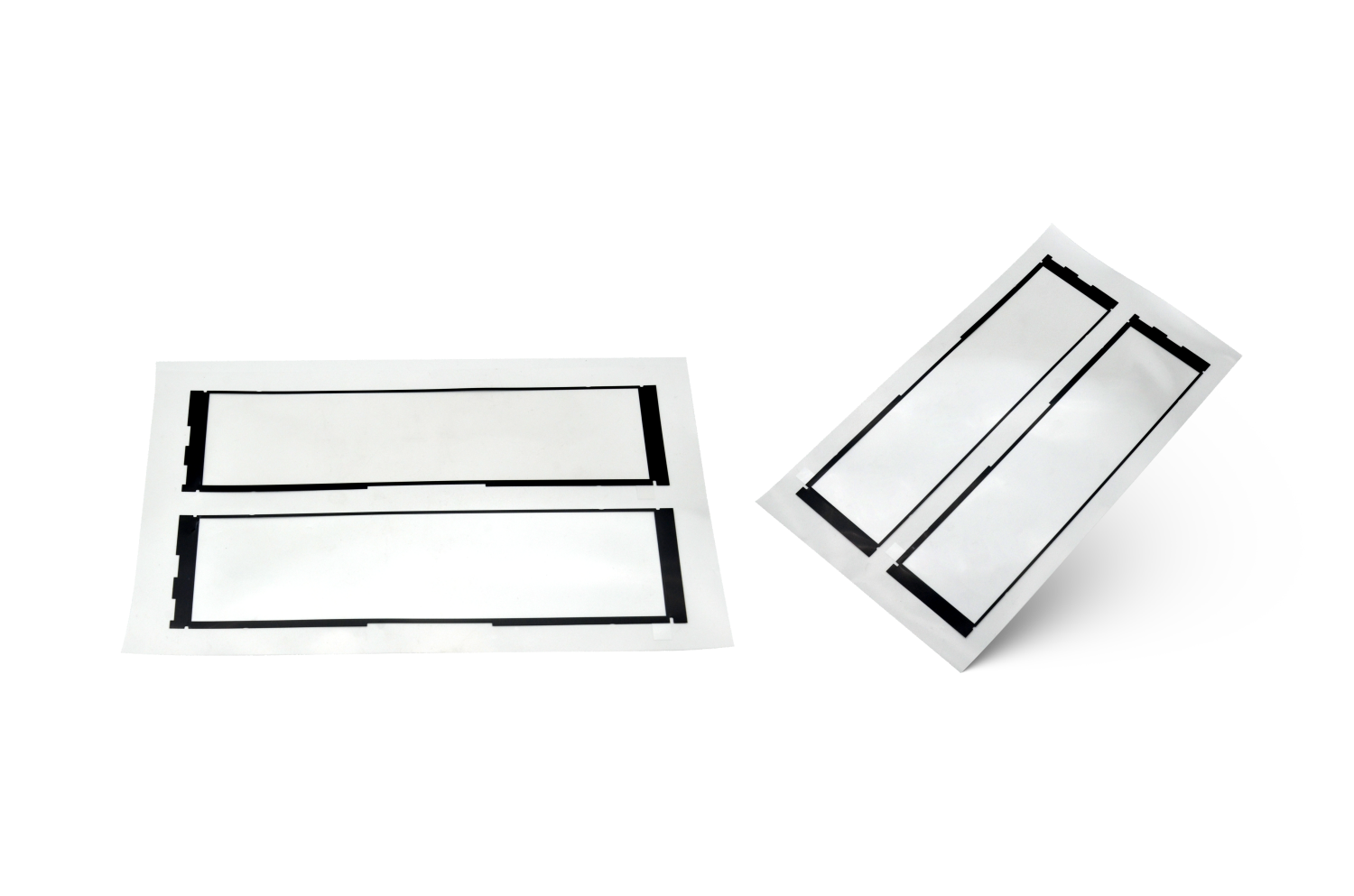
What is thermal conductive graphite sheet?
Thermal conductive graphite sheet is a new type of thermal and heat dissipation material that conducts heat uniformly in two directions, shielding heat sources and components while improving the performance of consumer electronic products. With the upgrading and replacement of electronic products, there is an increasing demand for heat management in accelerated, miniaturized, highly integrated, and high-performance electronic devices.
This new natural graphite solution has high heat dissipation efficiency, small space occupation, and light weight. The color is generally black, and the material is natural graphite that has been finely processed, with a thermal conductivity of up to 1500W/M-K in the horizontal direction. Commonly used in IC, CPU, MOS, LED, heat sink LCD-TV、 Laptops, communication devices, wireless switches DVD、 Handheld devices, etc.
Classification of Thermal Conductive Graphite Sheets:
Graphite sheets are divided into natural graphite sheets and artificial graphite sheets!
Natural graphite heat dissipation film has high thermal conductivity, easy construction, flexibility, and no gas or liquid permeability. Graphite chips do not age or become brittle, and are suitable for most chemical media. The general thermal conductivity is between 700-1200W/m.k. The disadvantage of natural graphite sheets is that they cannot be made too thin. Generally, the thinnest finished product is 0.1mm thick, so the market share of natural graphite is decreasing. At the same time, due to the structural factors of natural graphite itself, its heat dissipation effect is relatively weak.
Artificial graphite can be made very thin and has excellent heat dissipation effect, with a thermal conductivity of 1000-1500W/m.k, mainly reflected in its fast heat dissipation speed, but the price of artificial graphite is relatively high. In the increasingly pursuit of quality in the mobile phone market, synthetic graphite sheets are also highly favored.